

BY JOHN JACKLIN
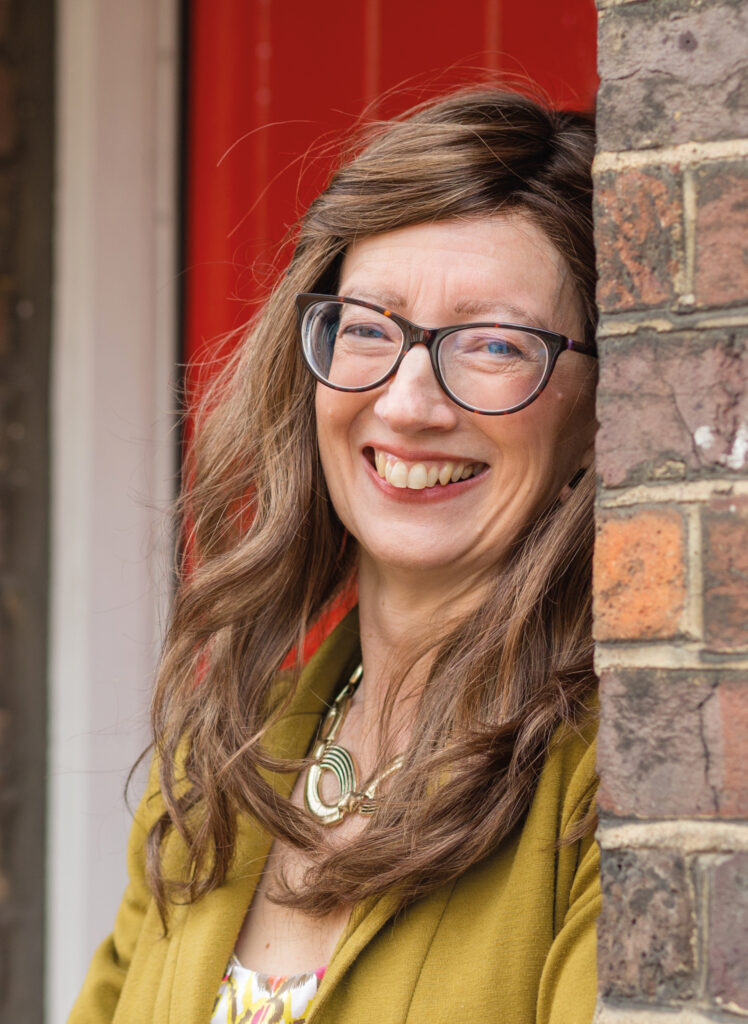
MUSICIAN and choir leader Jane Gatfield has science on her side in knowing that her choir in Henley called Sing Your Pain Away does exactly what it says on the tin.
Jane conducted a so-called social prescribing study over seven weeks with a leading researcher in the field of singing for health, Professor Stephen Clift. He is a professor emeritus at Canterbury Christ Church University and ran everything by the book, says Jane, 56. “I’m a musician not an academic, so I could not have done it without him.
“Some of the people in the study had been referred to us by the NHS,” she says. “On a week-by-week basis we measured a 24 per cent uplift in people’s mood and a 30 per cent reduction in anxiety.
“Across all the patients across all the sessions we did see a 13 per cent reduction in their physical pain. What was even more powerful was that we saw a 37 per cent increase in the participants’ capacity to handle their pain, which is just amazing. It was fascinating to see what a difference it had made to people’s lives.” She adds: “I could sense the Sing Away Your Pain sessions made a difference, but to see the figures and to see that difference measured was astounding.”
Jane suffers from a long-term health condition called Ehlers-Danlos Syndrome that causes her joints to dislocate and was the catalyst for the start of the choir project 11 years ago. “I began the groups because I have always been keen and active in the community and I was diagnosed with Ehlers-Danlos.
“Many people including some medics had not, and have not, heard of it. They go what’s that all about? Well, it is an absolute nightmare. It can affect the neck, the joints, everywhere.
“It makes your joints dislocate very easily and for me my normal daily routine was five or six joint dislocations a week and along with the pain and because of the pain I was unable to sleep well.
“It also incurs lots of practical difficulties such as not being able to walk far and I couldn’t stand for probably more than two minutes as my ankles would dislocate. I couldn’t sit unless I was on a specially adapted chair that supported every vertebra of my spine.”
‘What was even more powerful was that we saw a 37 per cent increase in the participants’ capacity to handle their pain, which is just amazing’

She adds: “I’d always loved singing, running choirs, running orchestras and so on and then I suddenly found myself excluded in all the choirs in the area because I couldn’t stand, sit or drive any distance.
“The condition was unpredictable. I didn’t know what was going to dislocate and when, so you could never commit to anything like a concert or a final rehearsal. Some joint would dislocate and I would end up in A&E.
“Singing became something quite negative instead of the positive that it had been — it became just something else that I could not do. It made me very sad at first.”
That was when Jane started looking for an outlet that could work for her and her condition. “I was thinking there must be some choir or group that accommodates people with disabilities or health conditions or mobility difficulties.
“I looked and looked but could not find a thing, so I thought I would start something myself and advertised. Thirty people rocked up at the first meeting. I could not believe it. You could have knocked me down with a feather.”
From the beginning, Jane was clear about her parameters for the singing group. “I said it would be different. We would not be performing so there was no pressure on people to get it note perfect for a certain day, it didn’t matter.
“We made it so that the venues were accessible; people could sit or stand or walk around; perch on a table or even sit on the floor — they can do whatever they want that makes them feel comfortable. And if you become overwhelmed you can just step out of the room.
“There were people who were in pain like me, people with arthritis, people with cancer; there were people with breathing difficulties who thought that the singing might help them. They too couldn’t sing in a traditional choir because they had to keep stopping to catch their breath. There was one lady with an oxygen cylinder. There were people who were suffering from anxiety and were breathing into paper bags to help them calm down. There were also people with mental and emotional pain caused by bereavement.
‘The sessions in Henley, which can be held over the internet, are lead by Colette Ashby, who began performing as a semi-professional singer at age 15’
“So all these people came and we started singing as planned — and I started learning about all these conditions too. So off we went.”
Jane ran the sessions for the first five years “as a side hustle” on a Thursday night because she had a day job working in IT, as she had for many years. “I was finding it increasingly tough because of my own challenges and I was really enjoying the feedback from that singing group.
“The sessions were making people feel confident because it was something they could do and they enjoyed and looked forward to. It brought people out of their houses. One or two had been housebound.
“So that was when I decided that this was what I wanted to do, and in 2019 I started five more singing groups, including the one in Henley.
“We had the prototype working then so we replicated it, 45 minutes’ drive from my house in Bourne End because that was as far as I could go without my back dislocating.”
There are now 14 groups in the Sing Away Your Pain stable, with some run in conjunction with charities to help people they support. There are sessions for unpaid carers as well as the public groups, and three specialist choirs for people with dementia. “The effect of music for people with dementia is really quite powerful,” Jane says. “The way that it can unlock their brains and their memories and get them interacting. It is amazing.”
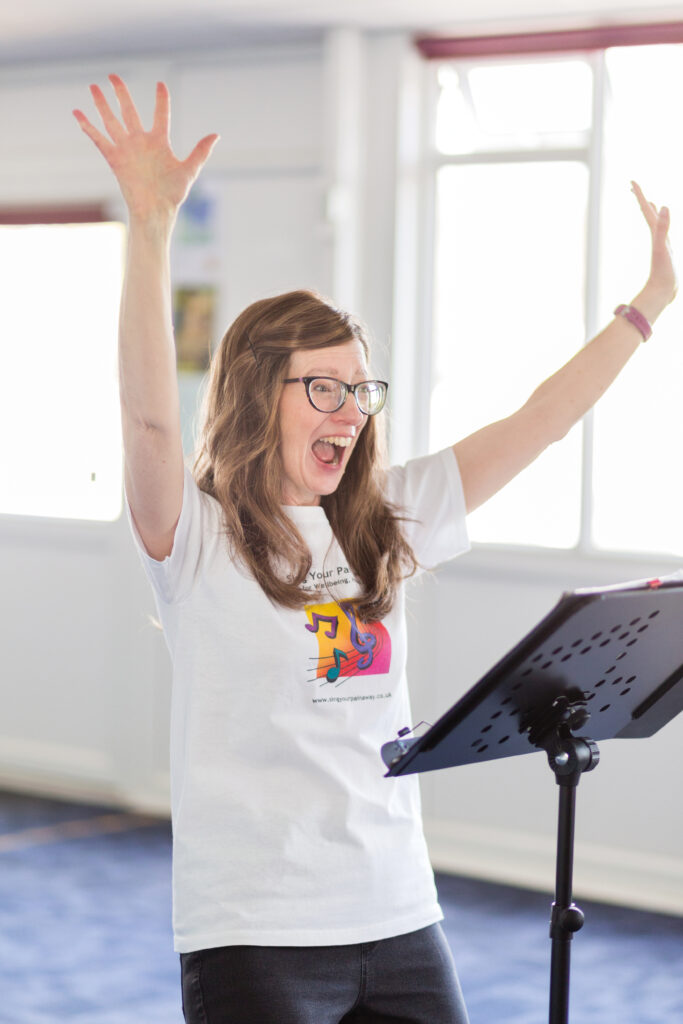
The sessions in Henley, which can be held over the internet, are lead by Colette Ashby, who began performing as a semi-professional singer at the age 15. Colette, who has been a wedding celebrant for the past five years, also sings with a band and in other choirs.
Jane says: “In Henley, as well as the singing, they are very gregarious. I was trying to find a picture on social media of the Henley crowd singing but I couldn’t find one. There were pictures of them going for lunch, in bars, in coffee shops you name it.
“That says it all,” she laughs.
“Singing has got that feel-good factor and promotes the production of endorphins but for many people just getting out of the house for the social side of life is as important as the singing.” She adds: “It’s predominantly women across all groups, although in Henley there are 40 per cent men. We have people who are divorced after years of being part of a couple and also some people in their teens and early twenties.
“We sing an eclectic mix of pop songs from the 50s, 60s and 70s, songs from the shows and some light classical stuff.
“We’ve got some downright silly songs just to make ourselves laugh, the odd sea shanty and last month it was all Christmas songs. The key things is that they are uplifting and upbeat.
“We are open to everyone and you don’t have to be in pain and you don’t have to be able to sing – we can easily teach people to do that.”
Annie Mortimer, a member of the Henley Sing Your Pain Away group, says: “The joy of singing is purely magical and the friendship we find in the group is priceless.”
Jane talks fondly of one person who thrived through Sing Your Pain Away. “They came with severe mental health problems, although they did not say so at the time, and they were struggling.
“I offered them the chance to help me out, to help improve their self worth. They became a real asset to the group. Years later they confided in me that the night before the first session, they had written a note and stockpiled a stash of prescription drugs.
“That was moving. But the singing helped them. That makes it so worthwhile.”
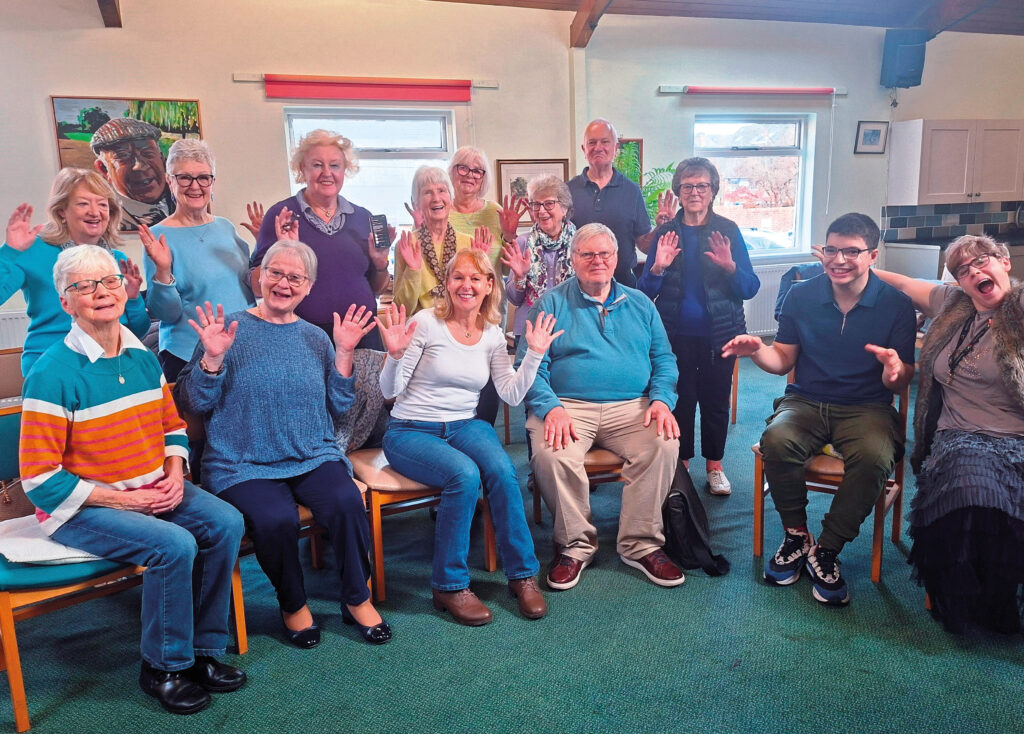
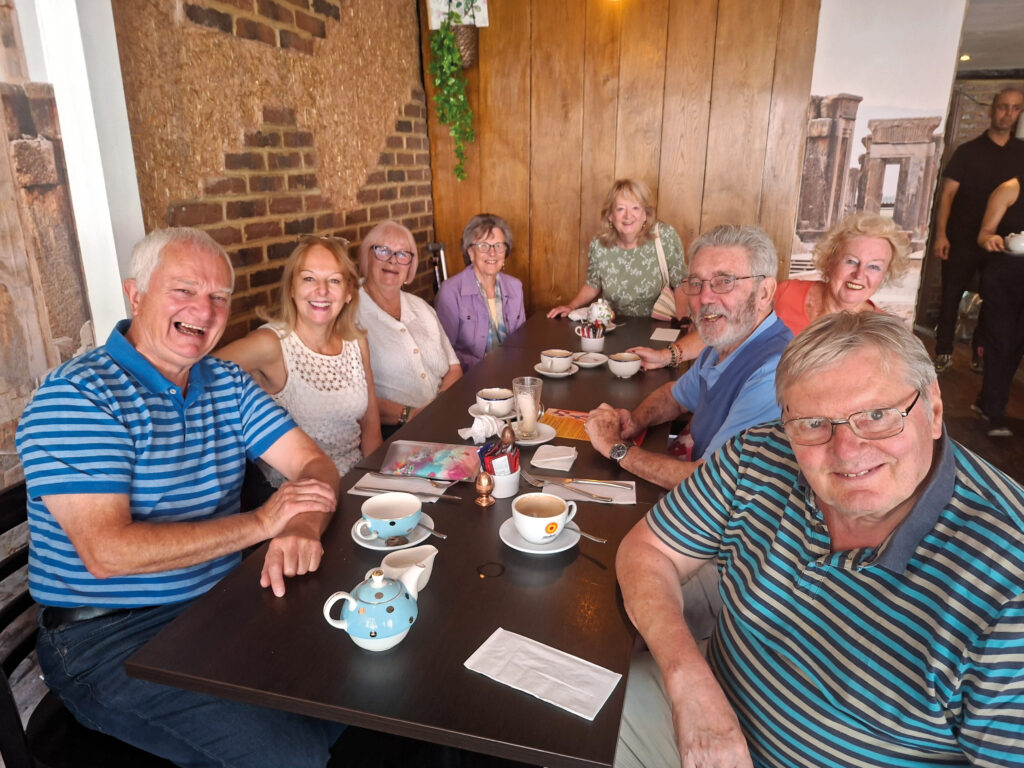
The Henley singers meet on Thursdays from 11am to noon at Henley Over 60s Club. www.singyourpainaway.co.uk